Earlier this week, I joined Dr. Charles Cogan, Philippe Aigrain and Elle Wasylina on France24's Le Débat to discuss the recent NSA leaks and the question of which new measures to take in a changing security climate.
Watch the debate after the jump.
Showing posts with label terrorism. Show all posts
Thursday, June 13, 2013
Monday, October 29, 2012
GUANTANAMO, ABSENT IN THE ELECTORAL DEBATE (LIBÉRATION)
Wikileaks recently published new documents giving further detail about the American presence at Guantanamo, but the topic has remained outside of the central electoral debate in the US.
Libération takes a look at why the prison at Guantanamo has not been closed (despite Obama's promise), the reasons it does not figure among the American public's top priorities, and why both Obama and Romney are reluctant to make it an electoral message.
I am pleased to figure among the specialists interviewed in the article.
Read: Guantanamo, la grande absente du débat américain (Libération)
Libération takes a look at why the prison at Guantanamo has not been closed (despite Obama's promise), the reasons it does not figure among the American public's top priorities, and why both Obama and Romney are reluctant to make it an electoral message.
I am pleased to figure among the specialists interviewed in the article.
Read: Guantanamo, la grande absente du débat américain (Libération)
Wednesday, January 26, 2011
SACEUR ADM. STAVRIDIS IN PARIS: EUROPE, NATO'S 21ST CENTURY SECURITY CHALLENGES
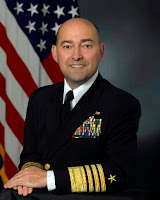
In a discussion held in Paris yesterday evening, the SACEUR, Admiral James Stavridis, laid out his 21st Century vision for European security, citing the principal challenges facing the European space (more broadly, NATO) and emphasizing possibility therein for Alliance members to pool resources, ideas and money to innovate solutions. The list of challenges largely echoes the political imperatives set forth by Secretary Clinton and Ambassador Daalder during their own recent visits to Paris and demonstrates the coherence in the Administration’s line on its policy priorities. The real challenges evoked by Admiral Stavridis can also be read as a wish list, a call to action even, of ways that the US would like to see Europe increase its leadership vis-à-vis the transatlantic relationship.
Beyond the list of challenges cited below, the Admiral vividly advocated that Europe get on board to forge meaningful strategic cooperation with Russia including eventual missile defense, to increase Euro-American manufacturing and industrial ties in the construction of defense materials, and to carve out a more significant role for Turkey in order to maximize its potentially prodigious geopolitical ramifications for the West (but stopped short of calling for EU membership).
Key Challenges:
-Demography: especially the decline in Europe’s population
-Afghanistan: progress is steady, but new avenues of cooperation are essential (public-private partnerships) as is increased focus on civilians (literacy, education initiatives) and better communication with populations
-Ballistic Missiles: many of which are in attack range of the EU
-Terrorism: ultimately a law enforcement issue to be supported by military competences; highlighted point that terrorism poses direct threat to EU soil
-Narcotics: high human costs (deaths, addiction, trafficking of persons) as well as robust financing source for terrorism and corruption
-Flow of Illegal Immigrants: vulnerability to the entry of persons with weapons (possibly nuclear)
-Pirates
-Cybersecurity: special need to protect finance and transportation structures
-Natural Disasters and rapid response capability
-Managing Public Perception of NATO’s actions in the world
Passing mention was also made to Energy Security, more specifically to water, as the Admiral advocated for markets to handle resource management and for governments to manage the related infrastructure issues.
- Amy Greene
Thursday, November 4, 2010
US MIDTERM ELECTIONS: WHAT HAPPENED AND WHY?
Here is a brief analysis of the results of this week's midterm elections:
1. The elections were a referendum on Obama, but...
The 2008 electoral campaign centered as much around Obama's character and personality as it did around the notion of breaking with a stale politics. It is no surprise that the midterms in part reflected the country's opinion of the president's demonstrated ability to translate his (often vague) promise of change into tangible results.
The first half of the Obama presidency was characterized in part for its stunning and unexpected lack of communication. Focused on quick action and assured of the eventual success of their programs (health care, stimulus package), the Administration failed to adequately reach out to the electorate to explain the stakes and expectations of any particular program. This led to a vacuum of leadership, an opportunity the Republicans seized to define then drive the discourse right through Election Day.
2. ...they were mostly a natural corrective measure in American politics
In 2006 then in 2008, Americans voted as much for the Democrats as they voted against the status quo (multiple wars, sinking economy, poor image in the world). Democrats made mighty electoral gains to acquire their largest Congressional majority in decades. Two successive electoral victories perhaps created the sense of having been given a mandate larger than it was in reality. A misread mandate together with economic freefall, the opacity surrounding the health care legislation, and the absence of sufficient presidential visibility thus motivated a skeptical and tired center-right votership to rearrange the political landscape.
3. Domestic issues trumped all and will continue to monopolize the American voter's attention
Remarkable is the total absence of international issues throughout the electoral campaign. America's longest war, Afghanistan, went largely unmentioned as did terrorism, Middle East politics, and America's image in the world. With the exception of the bluster surrounding the proposed mosque at Ground Zero and mild reaction to the recent harmful packages sent from Yemen, foreign policy remained squarely in the shadows as the economy took center stage.
- Amy Greene
1. The elections were a referendum on Obama, but...
The 2008 electoral campaign centered as much around Obama's character and personality as it did around the notion of breaking with a stale politics. It is no surprise that the midterms in part reflected the country's opinion of the president's demonstrated ability to translate his (often vague) promise of change into tangible results.
The first half of the Obama presidency was characterized in part for its stunning and unexpected lack of communication. Focused on quick action and assured of the eventual success of their programs (health care, stimulus package), the Administration failed to adequately reach out to the electorate to explain the stakes and expectations of any particular program. This led to a vacuum of leadership, an opportunity the Republicans seized to define then drive the discourse right through Election Day.
2. ...they were mostly a natural corrective measure in American politics
In 2006 then in 2008, Americans voted as much for the Democrats as they voted against the status quo (multiple wars, sinking economy, poor image in the world). Democrats made mighty electoral gains to acquire their largest Congressional majority in decades. Two successive electoral victories perhaps created the sense of having been given a mandate larger than it was in reality. A misread mandate together with economic freefall, the opacity surrounding the health care legislation, and the absence of sufficient presidential visibility thus motivated a skeptical and tired center-right votership to rearrange the political landscape.
3. Domestic issues trumped all and will continue to monopolize the American voter's attention
Remarkable is the total absence of international issues throughout the electoral campaign. America's longest war, Afghanistan, went largely unmentioned as did terrorism, Middle East politics, and America's image in the world. With the exception of the bluster surrounding the proposed mosque at Ground Zero and mild reaction to the recent harmful packages sent from Yemen, foreign policy remained squarely in the shadows as the economy took center stage.
- Amy Greene
Monday, May 24, 2010
OBAMA @ WEST POINT: NEW NATIONAL SECURITY VISION TAKES SHAPE
With the new National Security Strategy to be released this week, Obama's address to the 2010 graduating class at West Point may provide some initial shadings of what to expect from that longer report. In an address that begins to define an Obama vision at achieving US security, there are clear rejections of his predecessor's agenda - both by insisting on upholding freedoms in the face of terrorist scares and by calling for increased participation in the international system - and the introduction of a more comprehensive vision of security itself.Obama called for an "international order" to fight terrorism, nuclear proliferation, and poverty coupled with aggressive action to curb climate change and restore global economic health, among other pillars.
- Definition of US Security must be broadened both tactically...
• Broad American innovation must complement its military campaigns because "at no time in human history has a nation of diminished economic vitality maintained its military and political primacy."
• Domestic nation-building to include: development of clean energy; increase technological innovation and R&D, improve US education system
• Accompanying international effort to include: participation in international system despite its flaws; reliance on allies and seamless intelligence-cooperation; reengagement of US diplomacy and development in the world
- ...and Conceptually:
• A traditional military victory over terrorism being impossible, the US will be judged on what it builds and how it adheres to its core values, and security will depend directly on economic stability and forward-thinking development both at home and in the world.
• Obama on upholding core American values: "A fundamental part of our strategy for our security has to be America's support for those universal rights that formed the creed of our founding. And we will promote these values above all by living them [...] even when it's hard; even when we're being attacked; even when we're in the midst of war."
• A Comment on remaining steady despite terrorist attempts to derail the US: "Al Qaeda and its affiliates are small men on the wrong side of history. [...] We should not discard our freedoms because extremists try to exploit them. We cannot succumb to division because others try to drive us apart."
- Amy Greene
(photo credit: Politico)
Tuesday, March 23, 2010
AIPAC 2010: NO END TO THE IMPASSE
Hillary Clinton's speech to the 2010 meeting of AIPAC (American Israel Public Affairs Committee) in Washington on March 22 was, with few exceptions, a conciliatory exercise that did little to chafe the Israel lobby and even less reassure skeptics of the US's role in brokering a viable peace. Without defining any concrete next steps, Clinton nonetheless affirmed her personal support of the Jewish state and described America's commitment to it as “rock solid, unwavering, enduring and forever.”
Here are some highlights from Clinton's speech to AIPAC:
- Explicit nod to the broad regional implications of Israel's refusal to change policies, including several mentions to the legitimate right of Palestinian people to thrive in freedom and peace.
- Unequivocal US support for two-state solution according to 1967 lines, stop to settlement-building, and normalization of Israel's regional relations including with Syria. Affirmed Hamas and Hezbollah as "terrorist organizations" while calling for sanctions that "bite" against an Iran with unrelenting nuclear ambitions.
- Argued that untenability of status quo obliges Israel to change course: demographic reality does not favor Israel; technological advances make more difficult the task of protecting Israel's security through military means alone; and the status quo fuels violent extremist ideology that ultimately jeopardizes peace/security and fuels peace rejectionists' ambitions.
Following Clinton's speech, Prime Minister Netanyahu met with Secretary Clinton then with Vice President Biden. Whatever was said during these sessions, Israeli leaders were not persuaded to change the status quo that Clinton decried in her remarks. For that same evening, before the same conference, Netanyahu categorically refused to stop construction of settlements and insisted that Jerusalem belongs to Israel. This following the "insult" of announcing new settlements during the recent visit of Biden, a staunch long-time advocate for Israel.
Netanyahu's rebuke of the US appears driven by a motivation to resist any push-back from President Obama (however mild it has now proven to be) with the hope of making him a one-term president in order to demonstrate that no US politician can stand firm against Israel nor derail its chosen policies and still remain politically viable. This is an interesting gamble given recent poll results showing Israeli public opinion favoring Obama and showing less enthusiasm for Netanyahu and his Likud party.
The US pays a tremendous amount in annual bilateral aid to be treated as such. More disappointing still is the prospect that the administration lacks the strategic vision and political courage necessary to move beyond lukewarm declarations and to apply effective pressure in the face of opposition in order to yield meaningful results.
President Obama and Prime Minister Netanyahu are expected to meet behind closed doors at the White House on Tuesday, March 23.
- Amy Greene
Here are some highlights from Clinton's speech to AIPAC:
- Explicit nod to the broad regional implications of Israel's refusal to change policies, including several mentions to the legitimate right of Palestinian people to thrive in freedom and peace.
- Unequivocal US support for two-state solution according to 1967 lines, stop to settlement-building, and normalization of Israel's regional relations including with Syria. Affirmed Hamas and Hezbollah as "terrorist organizations" while calling for sanctions that "bite" against an Iran with unrelenting nuclear ambitions.
- Argued that untenability of status quo obliges Israel to change course: demographic reality does not favor Israel; technological advances make more difficult the task of protecting Israel's security through military means alone; and the status quo fuels violent extremist ideology that ultimately jeopardizes peace/security and fuels peace rejectionists' ambitions.
Following Clinton's speech, Prime Minister Netanyahu met with Secretary Clinton then with Vice President Biden. Whatever was said during these sessions, Israeli leaders were not persuaded to change the status quo that Clinton decried in her remarks. For that same evening, before the same conference, Netanyahu categorically refused to stop construction of settlements and insisted that Jerusalem belongs to Israel. This following the "insult" of announcing new settlements during the recent visit of Biden, a staunch long-time advocate for Israel.
Netanyahu's rebuke of the US appears driven by a motivation to resist any push-back from President Obama (however mild it has now proven to be) with the hope of making him a one-term president in order to demonstrate that no US politician can stand firm against Israel nor derail its chosen policies and still remain politically viable. This is an interesting gamble given recent poll results showing Israeli public opinion favoring Obama and showing less enthusiasm for Netanyahu and his Likud party.
The US pays a tremendous amount in annual bilateral aid to be treated as such. More disappointing still is the prospect that the administration lacks the strategic vision and political courage necessary to move beyond lukewarm declarations and to apply effective pressure in the face of opposition in order to yield meaningful results.
President Obama and Prime Minister Netanyahu are expected to meet behind closed doors at the White House on Tuesday, March 23.
- Amy Greene
Labels:
Biden,
Clinton,
Iran,
Israel,
Middle East,
Netanyahu,
nuclear,
Obama,
Palestine,
Syria,
terrorism
Tuesday, February 9, 2010
OBAMA'S DRONE POLICY: COUNTERPRODUCTIVE COUNTERTERRORISM? NEW STRATEGIC SHIFT NEEDED?
As President Obama continues escalation of the "Predator Wars" and seeks to increase purchases of drone technology in the fight against terrorism, Marc Thiessen of Foreign Policy argues that Obama's devotion to this program is both irresponsible and costly for American security interests.
Sure, drone attacks have proven successful in killing senior al Qaeda leaders throughout the world. And the mere use of these planes carries an undeniable psychological impact on terrorist leaders and their recruits. But Obama chose to rely more heavily on drone warfare at the very moment he stripped the CIA of its ability to capture and question these leaders. By tipping the scales of the security-values continuum too far towards values, Obama has in fact sacrificed both - despite their precision, drones also kill scores of innocent civilians while also eliminating the terrorists best-placed to divulge information about future attacks and the would-be attackers.
So while Obama appears tough on terror by killing key leaders, his lopsided approach is potentially more damaging than would be implementing a wise combination of drone attacks coupled with human intelligence-gathering efforts. As one high-ranking CIA official was quoted in the FP piece: "You can't kill them all, and you don't want to kill them all from an intelligence standpoint. We needed to know what they knew."
As Obama's presidency enters its second year, Americans and the world are awaiting delivery of the changes he promised. Discontentment with the Obama presidency has been mounting as evaluations of his early policies begin filtering in - among those policies, the troubling consequences of a continued over-reliance on drones.
Secretary Clinton insisted that the president's first year was focused on laying the groundwork for change. But the well-connected and highly-regarded Edward Luce at FT and Steve Clemons of Washington Note (among others) contend, based on close access to the White House players, that Obama's excessively narrow inner circle and its unwillingness to listen seriously to outsiders (including Obama's cabinet) has led the president on a failing course.
Will Obama show courage and honestly appraise his dwindling trajectory and make the staffing shake-ups necessary to inject innovative reflection on these most contentious policy frontiers?
- Amy Greene
Sure, drone attacks have proven successful in killing senior al Qaeda leaders throughout the world. And the mere use of these planes carries an undeniable psychological impact on terrorist leaders and their recruits. But Obama chose to rely more heavily on drone warfare at the very moment he stripped the CIA of its ability to capture and question these leaders. By tipping the scales of the security-values continuum too far towards values, Obama has in fact sacrificed both - despite their precision, drones also kill scores of innocent civilians while also eliminating the terrorists best-placed to divulge information about future attacks and the would-be attackers.
So while Obama appears tough on terror by killing key leaders, his lopsided approach is potentially more damaging than would be implementing a wise combination of drone attacks coupled with human intelligence-gathering efforts. As one high-ranking CIA official was quoted in the FP piece: "You can't kill them all, and you don't want to kill them all from an intelligence standpoint. We needed to know what they knew."
As Obama's presidency enters its second year, Americans and the world are awaiting delivery of the changes he promised. Discontentment with the Obama presidency has been mounting as evaluations of his early policies begin filtering in - among those policies, the troubling consequences of a continued over-reliance on drones.
Secretary Clinton insisted that the president's first year was focused on laying the groundwork for change. But the well-connected and highly-regarded Edward Luce at FT and Steve Clemons of Washington Note (among others) contend, based on close access to the White House players, that Obama's excessively narrow inner circle and its unwillingness to listen seriously to outsiders (including Obama's cabinet) has led the president on a failing course.
Will Obama show courage and honestly appraise his dwindling trajectory and make the staffing shake-ups necessary to inject innovative reflection on these most contentious policy frontiers?
- Amy Greene
Tuesday, January 5, 2010
NYT: JOHN BRENNAN ON OBAMA'S WAR ON TERRORISM
The New York Times has published a preview of its upcoming Sunday magazine cover article, "Inside Obama's War on Terrorism."
1. Obama's approach to fighting terrorism demonstrates continuity with the Bush years more than it does change.
The major shift is rhetorical with little political change to speak of. Obama has worked to reclaim the message that the US is fighting terrorists and not Islam, which he articulated in his June 2009 Cairo discourse. Why no more substantial policy differences?
-Because the administration is learning that Bush era policies are either necessary or too well-crafted to be easily dismantled.
-Many important evolutions to the counterterrorism strategy had already begun by the end of the Bush presidency (such as transferring Gitmo detainees and emptying many of the CIA's secret foreign prisons)
According to Bush's former CIA Director Michael Hayden, "It's really, really hard to find a difference that's meaningful and not atmospheric." The absence of sweeping change has angered many Obama supporters on the left who worry how much further Obama will lean toward Bush policies should the US fall under attack on his watch.
2. Special focus on John Brennan, assistant to the president for homeland security and counterterrorism, and his privileged place at the center of Obama's inner circle for national security.
-A career CIA man, Brennan eventually became George Tenet's chief of staff then the agency's Deputy Executive Director before quitting the government in 2005. Shortly after his departure, Brennan penned an op-ed criticizing the Bush administration ("Mr. President, You're Wrong on Iraq"), which he submitted for CIA clearance then withdrew. It was leaked to the White House thus thrusting him entirely out of the graces of the president's team.
-Brennan is close to former NSA Tony Lake, who introduced him to Obama during the campaign. On election, Obama considered naming Brennan as CIA Director before confronting two major problems: the would-be perception of Brennan's proximity to Tenet and his support of many of Bush's enhanced interrogation tactics including "black site" secret CIA prisons abroad (though Brennan did voice opposition to waterboarding)
3. Finally, the article evokes the emerging frontiers of terrorism, highlighting the success of drones in Pakistan, increased US funding to support Yemen anti-terror efforts, and the threat of American extremists who train abroad with the intention of carrying out attacks at home.
- Amy Greene
1. Obama's approach to fighting terrorism demonstrates continuity with the Bush years more than it does change.
The major shift is rhetorical with little political change to speak of. Obama has worked to reclaim the message that the US is fighting terrorists and not Islam, which he articulated in his June 2009 Cairo discourse. Why no more substantial policy differences?
-Because the administration is learning that Bush era policies are either necessary or too well-crafted to be easily dismantled.
-Many important evolutions to the counterterrorism strategy had already begun by the end of the Bush presidency (such as transferring Gitmo detainees and emptying many of the CIA's secret foreign prisons)
According to Bush's former CIA Director Michael Hayden, "It's really, really hard to find a difference that's meaningful and not atmospheric." The absence of sweeping change has angered many Obama supporters on the left who worry how much further Obama will lean toward Bush policies should the US fall under attack on his watch.
2. Special focus on John Brennan, assistant to the president for homeland security and counterterrorism, and his privileged place at the center of Obama's inner circle for national security.
-A career CIA man, Brennan eventually became George Tenet's chief of staff then the agency's Deputy Executive Director before quitting the government in 2005. Shortly after his departure, Brennan penned an op-ed criticizing the Bush administration ("Mr. President, You're Wrong on Iraq"), which he submitted for CIA clearance then withdrew. It was leaked to the White House thus thrusting him entirely out of the graces of the president's team.
-Brennan is close to former NSA Tony Lake, who introduced him to Obama during the campaign. On election, Obama considered naming Brennan as CIA Director before confronting two major problems: the would-be perception of Brennan's proximity to Tenet and his support of many of Bush's enhanced interrogation tactics including "black site" secret CIA prisons abroad (though Brennan did voice opposition to waterboarding)
3. Finally, the article evokes the emerging frontiers of terrorism, highlighting the success of drones in Pakistan, increased US funding to support Yemen anti-terror efforts, and the threat of American extremists who train abroad with the intention of carrying out attacks at home.
- Amy Greene
Subscribe to:
Posts (Atom)
