As 2012 winds to a close, so too does the time remaining for Congressional leaders and the President to reach a bargain on the fiscal cliff.
One of the major concerns is the prospect of $500 billion in automatic cuts to defense spending set to go into effect as part of the sequestration.
After the jump is a batch of links detailing how the sequestration will likely impact the larger defense community (Pentagon-both civil and military, defense industry, and defense lobbyists).
Showing posts with label Defense Industry. Show all posts
Showing posts with label Defense Industry. Show all posts
Monday, December 31, 2012
Tuesday, July 24, 2012
CAPITAL BRIEF - ROMNEY ON DEFENSE POLICY
Here is the sixth issue of Capital Brief, from July 17, analyzing Mitt Romney's (still vague) defense policy proposals and their consequences.
Click below to read the Brief.

Wednesday, June 6, 2012
PANETTA @ SHANGRI-LA DIALOGUE: EXPLAINING US' ASIA PIVOT

The overall context is one of constraints - namely economic - and of course the need to adapt to the profound changes underway caused by the emergence of Asia Pacific as a major global pole. The official line is to accomplish more with less, and to act more effectively within a series of defined limits and fixed objectives.
Most of the speech, however, was spent elaborating the four underlying principles and going into details about what the policy consequences would be.
What are the four basic principles outlined by Panetta?
More after the jump...
Friday, May 18, 2012
SPOTLIGHT ON...: NEW FRENCH ADMINISTRATION (FABIUS, LE DRIAN, MOSCOVICI)
The government of French President François Hollande, led by Prime Minister Jean-Marc Ayrault, took office yesterday, on May 17. Among the 34 ministers in Hollande's cabinet (of which half are women), three people in particular are likely to be especially visible to international audiences. They are Foreign Affairs minister Laurent Fabius, Defense Minister Jean-Yves Le Drian, and Finance Minister Pierre Moscovici.
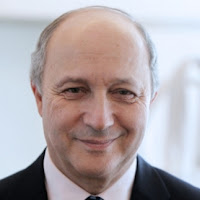
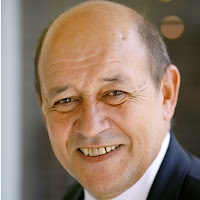
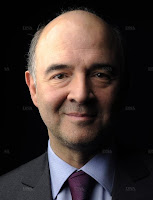
Potusphere takes a quick glimpse at these men and their careers so far.

LAURENT FABIUS: FOREIGN AFFAIRS
Fabius, 65 years old, is one of the few "elephants" (familiar term to describe top Socialist Party leaders) to find a place in the new French government. He was previously Minister of Finance (2000-2002), Industry and Research (1983-84), and Budget (1981-83). From 1984-1986, Fabius served as France's youngest prime minister (just 37 years old) under another Socialist president, François Mitterand.
Laurent Fabius was also twice president of the National Assembly (equivalent of Speaker of the House) from 1997-2000 and 1988-1992, serving from 1995-97 as the president of the parliament's socialist group (leader of the opposition) when the Right won the majority.
In the 1980s, Fabius successfully campaigned for French sanctions against the South African apartheid regime, publicly pushed back against communist Poland, and decried Castro's Cuba. But Fabius is most known for his vocal opposition to the European Constitution Treaty in 2005, which ran contrary to the position France's and Europe's socialists, who lined up in support of the treaty. Fabius presided over other key moments in Europe - namely the passage to the euro and the creation of the major French energy conglomerate Areva. On assuming his foreign affairs post on May 17, Fabius said: "I am profoundly European, but we need a different Europe, one that is more oriented toward jobs."
In 2009, Fabius expressed his opposition to France's reintegration into NATO's integrated command.
Fabius was a rival of François Hollande within the Socialist party, ran against him in the Socialist presidential primary before supporting party secretary Martine Aubry's bid. Once Hollande was elected the party's candidate, Fabius lent his support and expertise to Hollande - traveling abroad on the candidate's behalf and mapping out the new president's first 100 days in office. Fabius was named foreign affairs minister not for his proximity to the candidate but rather for his experience, expertise, and gravitas. The nomination is also viewed by some as an effort by President Hollande to represent the different currents of his party within his administration.

JEAN-YVES LE DRIAN: DEFENSE
Le Drian, 64 years old, is a longtime friend of François Hollande and early supporter of his presidential campaign. He is from a modest family in Brittany, from a town (Lorient) with close historical ties to the French military. He first registered with the Socialist Party after hearing François Mitterand speak and entered politics at the local level in 1977 before being elected to the National Assembly just one year later at the age of 30. Le Drian spent much of his political career connected to Brittany (serving as mayor of his hometown, member of parliament representing that area). From 1991-92, Le Drian was the secrétaire d'Etat à la mer, a ministerial post overseeing, in part, coastal and sea affairs. Most recently, he was the president of the Brittany region (a job perhaps equivalent to a US governorship).
Once in 2007 and again in 2009, former president Nicolas Sarkozy proposed the helm of the defense ministry to Le Drian, who twice refused on the grounds that he did not want to serve in a government that was not Socialist.
Since 2006, he animated a high-level monthly defense and security reflection group comprised of military officials, civil servants, industry representatives and former Socialist ministers of defense.
During the 2012 presidential campaign, Le Drian was in charge of defense and security questions for François Hollande. It is believed that Le Drian's friendship with the head of the French army will be an advantage.
Le Drian visited Washington once during the campaign, in March 2012.

PIERRE MOSCOVICI: FINANCE
Pierre Moscovici, now 54 years old, was the youngest person to be elected Socialist Party secretary (at just 33 years old in 1990). In 1992, he became Party treasurer. Moscovici held other leadership roles within his party while becoming close to former prime minister Lionel Jospin.
Moscovici was first elected to European Parliament in 1994, where he served until 1997 before becoming France's Minister of European Affairs (1997-2002). During his time as Minister, Moscovici helped to prepare France's EU presidency (beginning of 2001), helped to negotiate the European Constitution Treaty.
In 2004, Moscovici was once again elected a member of European Parliament, where he served until 2007 and during which time he served as one of its vice presidents. In 2007, he returned to the French National Assembly.
Considered to be a leading figure in the Socialist party's social-democrat current, Moscovici was an early supporter of François Hollande's presidential bid and served as Hollande's campaign director.
(Photo credits: Manche Libre; France Inter; AFP, respectively)
Friday, February 3, 2012
IMPACT OF BUDGET CUTS ON US DEFENSE INDUSTRY
In light of the significant reduction in defense spending recently unveiled by President Obama, the question of the real impact of the cuts on the defense industry remains pressing.
Some key reading on the topic:
- The impact of reductions on specific programs; Future investment possibilities, at the Washington Post
- Panetta reassures defense sector; Tension between Pentagon and industry at Reuters
- US defense contractors look to export market to offset domestic reductions; Forecasts for 2012 at Business Week
- Analysis: Defense cuts will not immediately damage US defense industry because major overhaul largely punted to next administration at Defense News
Some key reading on the topic:
- The impact of reductions on specific programs; Future investment possibilities, at the Washington Post
- Panetta reassures defense sector; Tension between Pentagon and industry at Reuters
- US defense contractors look to export market to offset domestic reductions; Forecasts for 2012 at Business Week
- Analysis: Defense cuts will not immediately damage US defense industry because major overhaul largely punted to next administration at Defense News
Thursday, January 5, 2012
OBAMA ON THE DEFENSE STRATEGIC REVIEW
Earlier today, President Obama introduced the findings of the Defense Strategic Review, designed to outline both American strategic interests and its spending priorities over the coming decade while cutting hundreds of billions of dollars from the defense budget. The DSR is set to flesh out approximately $500 billion in cuts, with the potential to add another $500 billion in reductions beginning in January 2013.
The President was Joined by Defense Secretary Leon Panetta and the chairman of the Joint Chiefs, General Martin Dempsey.
The President gave no specific figures nor did he announce the funding of any new initiatives or weapons systems. While outlining the overarching priorities going forward, Obama added that US might should be defined more comprehensively - including by its agility, flexibility, leanness, and preparedness for new challenges.
Some important take away points from the President's speech:
- Key commitments will remain: "vigilance" in the Middle East, maintained investment in NATO, strengthened presence in Asia Pacific.
- Replacement of large nation-building missions (Iraq, Afghanistan) with the reliance on smaller conventional forces coupled with the modernization of systems and capabilities reflecting future threats rather than outdated Cold War paradigms. This means funding programs geared toward intelligence, surveillance and reconnaissance, counterterrorism efforts, countering weapons of mass destruction, and gaining access to denied spaces.
- Amelioration of treatment given to veterans, opening opportunities to better health and mental health care, job opportunities, and integration back into society following their service.
- Emphasis on the need to rebalance the ensemble of national programs, restore America's internal resources and infrastructures, and begin to climb out of its massive debt - defense budget cuts are a major first step in achieving this balance.
None of these points were particularly surprising, as administration officials have been talking for weeks about these same themes, including the will to bolster American presence in Asia while scaling back the large missions that so thoroughly consumed the military since 9/11.
A number of questions remain as to what the specific cuts will look like and how they will be received and debated both within the US (and among Republican presidential candidates) and among America's allies:
For example, what will be the general reaction in Europe as the US shifts its focus to Asia Pacific? Will there be any notable change in troop numbers? What new expectations might the US have of its NATO allies given its turn to other areas of the world? What are possible areas of convergence for the US and Europe in emerging power zones? What challenges can be anticipated in the transatlantic alliance following this strategic shift?
More precise details of the Defense Strategic Review will follow in the coming weeks.
Stay tuned to Potusphere for the latest in these developments...
- Amy Greene
The President was Joined by Defense Secretary Leon Panetta and the chairman of the Joint Chiefs, General Martin Dempsey.
The President gave no specific figures nor did he announce the funding of any new initiatives or weapons systems. While outlining the overarching priorities going forward, Obama added that US might should be defined more comprehensively - including by its agility, flexibility, leanness, and preparedness for new challenges.
Some important take away points from the President's speech:
- Key commitments will remain: "vigilance" in the Middle East, maintained investment in NATO, strengthened presence in Asia Pacific.
- Replacement of large nation-building missions (Iraq, Afghanistan) with the reliance on smaller conventional forces coupled with the modernization of systems and capabilities reflecting future threats rather than outdated Cold War paradigms. This means funding programs geared toward intelligence, surveillance and reconnaissance, counterterrorism efforts, countering weapons of mass destruction, and gaining access to denied spaces.
- Amelioration of treatment given to veterans, opening opportunities to better health and mental health care, job opportunities, and integration back into society following their service.
- Emphasis on the need to rebalance the ensemble of national programs, restore America's internal resources and infrastructures, and begin to climb out of its massive debt - defense budget cuts are a major first step in achieving this balance.
None of these points were particularly surprising, as administration officials have been talking for weeks about these same themes, including the will to bolster American presence in Asia while scaling back the large missions that so thoroughly consumed the military since 9/11.
A number of questions remain as to what the specific cuts will look like and how they will be received and debated both within the US (and among Republican presidential candidates) and among America's allies:
For example, what will be the general reaction in Europe as the US shifts its focus to Asia Pacific? Will there be any notable change in troop numbers? What new expectations might the US have of its NATO allies given its turn to other areas of the world? What are possible areas of convergence for the US and Europe in emerging power zones? What challenges can be anticipated in the transatlantic alliance following this strategic shift?
More precise details of the Defense Strategic Review will follow in the coming weeks.
Stay tuned to Potusphere for the latest in these developments...
- Amy Greene
Wednesday, January 26, 2011
SACEUR ADM. STAVRIDIS IN PARIS: EUROPE, NATO'S 21ST CENTURY SECURITY CHALLENGES
 In a discussion held in Paris yesterday evening, the SACEUR, Admiral James Stavridis, laid out his 21st Century vision for European security, citing the principal challenges facing the European space (more broadly, NATO) and emphasizing possibility therein for Alliance members to pool resources, ideas and money to innovate solutions.
 The list of challenges largely echoes the political imperatives set forth by Secretary Clinton and Ambassador Daalder during their own recent visits to Paris and demonstrates the coherence in the Administration’s line on its policy priorities. The real challenges evoked by Admiral Stavridis can also be read as a wish list, a call to action even, of ways that the US would like to see Europe increase its leadership vis-à-vis the transatlantic relationship.
Beyond the list of challenges cited below, the Admiral vividly advocated that Europe get on board to forge meaningful strategic cooperation with Russia including eventual missile defense, to increase Euro-American manufacturing and industrial ties in the construction of defense materials, and to carve out a more significant role for Turkey in order to maximize its potentially prodigious geopolitical ramifications for the West (but stopped short of calling for EU membership).
Key Challenges:
-Demography: especially the decline in Europe’s population
-Afghanistan: progress is steady, but new avenues of cooperation are essential (public-private partnerships) as is increased focus on civilians (literacy, education initiatives) and better communication with populations
-Ballistic Missiles: many of which are in attack range of the EU
-Terrorism: ultimately a law enforcement issue to be supported by military competences; highlighted point that terrorism poses direct threat to EU soil
-Narcotics: high human costs (deaths, addiction, trafficking of persons) as well as robust financing source for terrorism and corruption
-Flow of Illegal Immigrants: vulnerability to the entry of persons with weapons (possibly nuclear)
-Pirates
-Cybersecurity: special need to protect finance and transportation structures
-Natural Disasters and rapid response capability
-Managing Public Perception of NATO’s actions in the world
Passing mention was also made to Energy Security, more specifically to water, as the Admiral advocated for markets to handle resource management and for governments to manage the related infrastructure issues.
- Amy Greene
Sunday, May 9, 2010
US SENATE LAUNCHES BIPARTISAN AEROSPACE CAUCUS
On May 6, 2010, the Senate launched its bipartisan Aerospace Caucus as an attempt to gather political, industry and military leaders to create a long-term national security strategy for the sector by focusing on education, innovation, reform of defense acquisition and infrastructure and technology investment.
Though aerospace is one of the nation's healthiest and most robust sectors -- counting more than $200 billion in sales in 2009 and supporting more than 30,000 companies and 2 million workers -- co-founders Sens. Patty Murray (D-Washington) and Kit Bond (R-Missouri) warn that emerging challenges (declining markets and uncertain defense spending) could endanger the industry should it fail to anticipate and address future needs and lack a global long-term strategic vision.
The caucus is expected to:
- Provide oversight of aerospace defense programs
- Promote government spending on U.S. aviation infrastructure and development
- Ensure a competitive industrial base
- Promote education and workforce development programs that prepare Americans for careers in the aerospace industry
- Work to reform export control rules
- Secure Senate ratification of defense trade treaties with the UK and Australia
- Lobby for investments in new technology and research & development
- Work to implement efforts to modernize America's aviation infrastructure
It remains to be seen how effective this caucus will actually be given the number of its members who are not currently at the height of their influence -- some long-serving senators are not seeking reelection in 2010 (Brownback, Dodd), while others have been tossed from the running (Bennett) and are politically embroiled (Burris, Ensign). Also to be seen, its eventual role vis-à-vis relations with European companies in the sector. In Senator Murray's district, the largest employer is Boeing, which is sure to have an impact.
The Aerospace Caucus currently has no members from Alabama, a major industry production zone that would also host EADS North America's aerial refueling tanker assembly line should it win the contract over Boeing.
The 22-member group is comprised of Sens. Murray and Bond and the following:
Mark BEGICH, D-Alaska
Michael BENNET, D-Colorado
Robert BENNETT, R-Utah
Sam BROWNBACK, R-Kansas
Richard BURR, R-N. Carolina
Roland BURRIS, D-Illinois
Maria CANTWELL, D-Washington
Saxby CHAMBLISS, R-Georgia
Thad COCHRAN, R-Mississippi
John CORNYN, R-Texas
Christopher DODD, D-Connecticut
John ENSIGN, R-Nevada
Kay BAILEY HUTCHISON, R-Texas
James INHOFE, R-Oklahoma
Johnny ISAKSON, R-Georgia
Claire McCASKILL, D-Missouri
James RISCH, R-Idaho
Pat ROBERTS, R-Kansas
John TESTER, D-Montana
David VITTER, R-Louisiana
For Further Reading:
Defense News
Seattle Post Intelligencer
- Amy Greene
Though aerospace is one of the nation's healthiest and most robust sectors -- counting more than $200 billion in sales in 2009 and supporting more than 30,000 companies and 2 million workers -- co-founders Sens. Patty Murray (D-Washington) and Kit Bond (R-Missouri) warn that emerging challenges (declining markets and uncertain defense spending) could endanger the industry should it fail to anticipate and address future needs and lack a global long-term strategic vision.
The caucus is expected to:
- Provide oversight of aerospace defense programs
- Promote government spending on U.S. aviation infrastructure and development
- Ensure a competitive industrial base
- Promote education and workforce development programs that prepare Americans for careers in the aerospace industry
- Work to reform export control rules
- Secure Senate ratification of defense trade treaties with the UK and Australia
- Lobby for investments in new technology and research & development
- Work to implement efforts to modernize America's aviation infrastructure
It remains to be seen how effective this caucus will actually be given the number of its members who are not currently at the height of their influence -- some long-serving senators are not seeking reelection in 2010 (Brownback, Dodd), while others have been tossed from the running (Bennett) and are politically embroiled (Burris, Ensign). Also to be seen, its eventual role vis-à-vis relations with European companies in the sector. In Senator Murray's district, the largest employer is Boeing, which is sure to have an impact.
The Aerospace Caucus currently has no members from Alabama, a major industry production zone that would also host EADS North America's aerial refueling tanker assembly line should it win the contract over Boeing.
The 22-member group is comprised of Sens. Murray and Bond and the following:
Mark BEGICH, D-Alaska
Michael BENNET, D-Colorado
Robert BENNETT, R-Utah
Sam BROWNBACK, R-Kansas
Richard BURR, R-N. Carolina
Roland BURRIS, D-Illinois
Maria CANTWELL, D-Washington
Saxby CHAMBLISS, R-Georgia
Thad COCHRAN, R-Mississippi
John CORNYN, R-Texas
Christopher DODD, D-Connecticut
John ENSIGN, R-Nevada
Kay BAILEY HUTCHISON, R-Texas
James INHOFE, R-Oklahoma
Johnny ISAKSON, R-Georgia
Claire McCASKILL, D-Missouri
James RISCH, R-Idaho
Pat ROBERTS, R-Kansas
John TESTER, D-Montana
David VITTER, R-Louisiana
For Further Reading:
Defense News
Seattle Post Intelligencer
- Amy Greene
Friday, January 29, 2010
HILLARY CLINTON IN PARIS: MAJOR ADDRESS ON EUROPEAN SECURITY

This afternoon, January 29, Secretary Clinton delivered a major address on European Security in conjunction with the US Embassy and IRSEM, the Ministry of Defense's strategic studies think tank (Institut de Recherche Stratégique de l'Ecole Militaire).
While emphasizing the need for collective European-American responses to delicately interlaced global challenges, Clinton voiced her support for the Lisbon Treaty, Europe's decision-making autonomy, and praised Europe as a model of transformative power. Though she did mention areas for improvement (need for democratization in certain zones, increased economic opportunity, revamped arms control regime and updated EU/North American institutions fit to manage new problems) and new frontiers for collaboration (cyberterror, terrorism, climate change, energy security).
While assuring the audience that the US's security is anchored in Europe ("Much of what we hope to achieve globally depends on our European partners") based largely on shared, universal values, Clinton asserted the six core principles guiding America's views on European security:
1. Sovereignty of All States to choose allies, provide for their defense, and define boundaries while rejecting claims to spheres of influence.
2. Indivisibility of European Security - there is one Europe with the US as its partner, and sometimes Russia too. It is time to move beyond false divisions (ie: NATO v. non-NATO, EU v; non-EU, etc.) in order to meet common goals.
3. Unwavering Commitment to Article V of NATO - the US will use missile defense to protect all NATO territory. The US is working to engage Moscow to convince it of the stake Russia holds in the presence of nearby missile defense.
4. Practicing Transparency in Dealing with Europe - global threats demand more open exchanges between militaries (info, exercises, site visits). The US supports a revived CFE Treaty for a modern security framework that limits deployment, reinforces territorial integrity, and meets new challenges.
5. Commitment to Non-Proliferation through support of existing treaties, negotiation of new nuclear posture, press other nations to reduce their arsenals and secure stocks.
6. Support Democratization Efforts in order to nourish free expression, encourage development, and end abuses like human trafficking. In this context, the US strongly supports strengthening the OSCE.
Other central topics raised by Clinton:
- Russia: engagement to meet challenges like Iran, climate change, energy security, and non-proliferation.
- China: use a mix of existing institutions to work with Beijing. Key elements: promote military transparency, convince them to sanction Iran, include them in strategic moves like the North Korea talks
- NATO Enlargement: Clinton voiced support for ongoing NATO enlargement plans with Eastern European nations. When this author asked about including non-Western nations who meet membership criteria, Clinton opposed stretching NATO's geography but cited NATO/ISAF as an example of successful cross-hemisphere cooperation that could be applied to other issues like cyberterror.
Click HERE for full text, taken from the State Department.
- Amy Greene
Friday, January 15, 2010
NEW MOMENTUM FOR US EXPORT-REGIME CONTROL REFORM?
On January 13, it was reported that Secretary Gates, Deputy Defense Secretary William Lynn, and Acquisitions chief Ash Carter met with Aerospace Industries Association (AIA), a top trade lobby comprised of leading defense industry executives (including those of Lockheed and Boeing), to discuss the future of government/industry collaboration.
The meeting comes in the days leading up to the conclusion of the administration's review of export regime controls, commissioned in August 2009 and due for release later this month.
Gates praised the industry for rapidly meeting the Pentagon's needs in Iraq and Afghanistan, including prompt provision of drones and mine-resistant vehicles. He pledged to secure growth in the Defense budget, arguing that the task would be greatly facilitated by an industry that vigilantly cuts costs and delivers provisions on-time.
Gates also threw his full support behind AIA-backed export-regime control reforms. Typically opposed by the Pentagon, Gates' reversal gives new hope to proponents of acquisition and export-control reform. Though he is not the first official to favor the idea - in September 2009, Secretary Clinton and other senior officials (like assistant SecStates Andrew Shapiro and Ellen Tauscher, as well as NSA James Jones) called to remake the notorious ITAR regulations.
The meeting, coupled with the administration's commitment to reshape export controls, raises a few questions:
- How commercially-driven will the White House allow export-regime reform to become?
- How implicated will America's allies be in redrawing the US Munitions list?
- How will the Administration explain any eventual reforms in order to mitigate critics who call the administration weak on national security and seek to damage the White House's credibility in the lead-up to midterm elections?
Also, the Senate Foreign Relations Committee is expected to introduce legislation in late January (around the time of the release of the White House strategic review) calling for a Congressional conference that will likely raise the topic of easing restrictions on communications satellite exports.
Prior to its meeting with Gates, the AIA gave President Obama a letter calling for reform on the basis that the current regulations cost US exporters billions in annual sales and weaken defense-related industries that are implicated in the construction and production of new technologies. The list of goods on the US Munitions List is outdated and includes many banal items while excluding far more threatening technologies such as stealth and night vision.
The AIA outlined four key areas for reform, elements to which Gates has now voiced his support:
1. Updating the US Munitions List and commodity jurisdiction
2. More efficient, clearer division of responsibility between government agencies in caseload management
3. Placing decision-making on technology release in the hands of the Defense Department
4. Treatment of drones as a Category I item in the multilateral Missile Technology Control Regime
- Amy Greene
The meeting comes in the days leading up to the conclusion of the administration's review of export regime controls, commissioned in August 2009 and due for release later this month.
Gates praised the industry for rapidly meeting the Pentagon's needs in Iraq and Afghanistan, including prompt provision of drones and mine-resistant vehicles. He pledged to secure growth in the Defense budget, arguing that the task would be greatly facilitated by an industry that vigilantly cuts costs and delivers provisions on-time.
Gates also threw his full support behind AIA-backed export-regime control reforms. Typically opposed by the Pentagon, Gates' reversal gives new hope to proponents of acquisition and export-control reform. Though he is not the first official to favor the idea - in September 2009, Secretary Clinton and other senior officials (like assistant SecStates Andrew Shapiro and Ellen Tauscher, as well as NSA James Jones) called to remake the notorious ITAR regulations.
The meeting, coupled with the administration's commitment to reshape export controls, raises a few questions:
- How commercially-driven will the White House allow export-regime reform to become?
- How implicated will America's allies be in redrawing the US Munitions list?
- How will the Administration explain any eventual reforms in order to mitigate critics who call the administration weak on national security and seek to damage the White House's credibility in the lead-up to midterm elections?
Also, the Senate Foreign Relations Committee is expected to introduce legislation in late January (around the time of the release of the White House strategic review) calling for a Congressional conference that will likely raise the topic of easing restrictions on communications satellite exports.
Prior to its meeting with Gates, the AIA gave President Obama a letter calling for reform on the basis that the current regulations cost US exporters billions in annual sales and weaken defense-related industries that are implicated in the construction and production of new technologies. The list of goods on the US Munitions List is outdated and includes many banal items while excluding far more threatening technologies such as stealth and night vision.
The AIA outlined four key areas for reform, elements to which Gates has now voiced his support:
1. Updating the US Munitions List and commodity jurisdiction
2. More efficient, clearer division of responsibility between government agencies in caseload management
3. Placing decision-making on technology release in the hands of the Defense Department
4. Treatment of drones as a Category I item in the multilateral Missile Technology Control Regime
- Amy Greene
Subscribe to:
Posts (Atom)